
The Rise of Digital Dentistry and 3D Scans

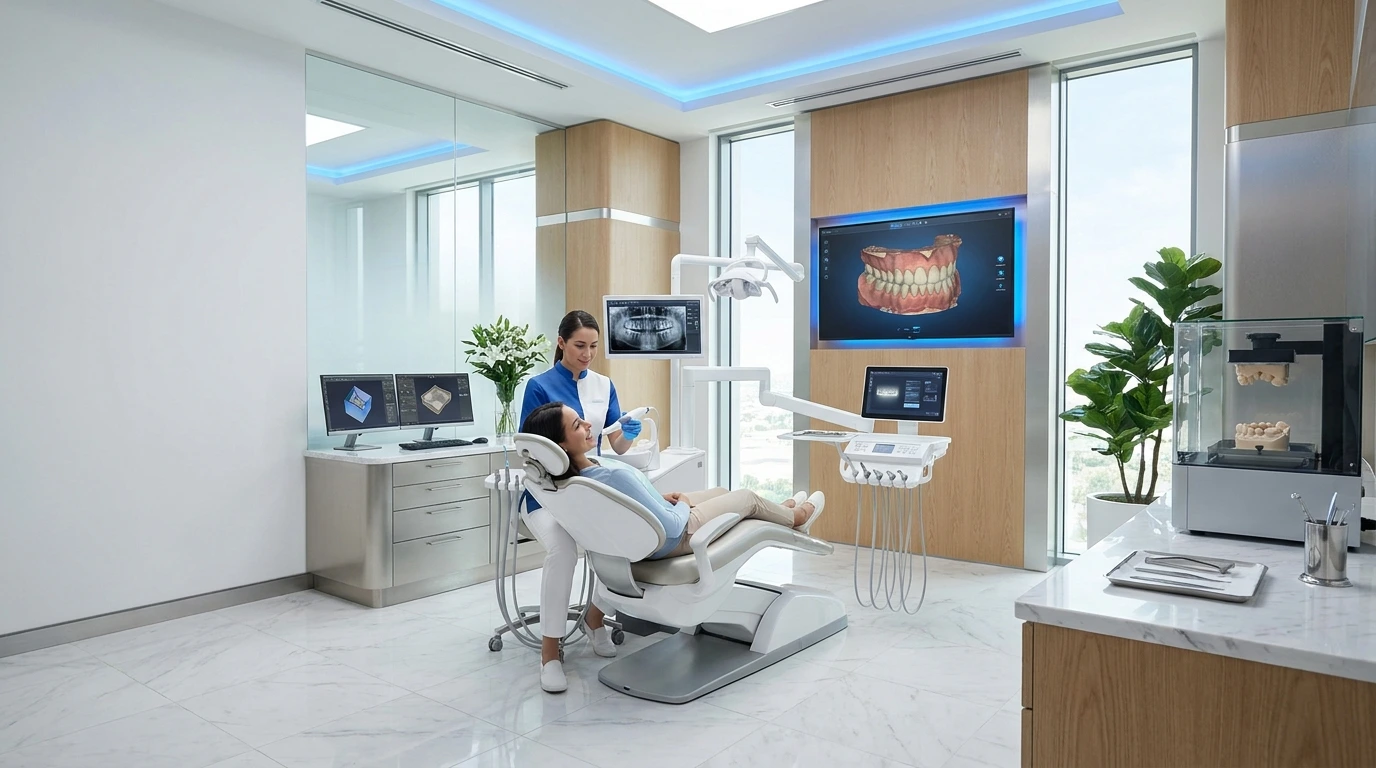
The Digital Revolution in the Dental Chair
For many years, a visit to the dentist involved gooey impression materials, uncomfortable x-ray films, and waiting weeks for restorations to be crafted in a remote lab. Today, the landscape of dental care has been completely transformed by the rapid integration of digital technologies. "Digital Dentistry" is no longer a futuristic concept; it is the present standard of care in modern practices, offering unprecedented levels of precision, speed, and patient comfort.
From the moment you step into a digitally equipped clinic, technology plays a role in every aspect of your care, from diagnosis to treatment planning and final restoration. This revolution is driven by tools like intraoral scanners, Cone Beam Computed Tomography (CBCT), and 3D printing, which collectively enhance the dental experience in profound ways.
Saying Goodbye to the Goop: Intraoral Scanners
One of the most noticeable and universally appreciated advancements in digital dentistry is the intraoral scanner. Traditionally, when a dentist needed a model of a patient's teeth—whether for a crown, a bridge, Invisalign, or a nightguard—they had to use a messy, putty-like impression material. Patients often found this process uncomfortable, gag-inducing, and claustrophobic.
Intraoral scanners have made this unpleasant experience obsolete. These wand-like devices capture thousands of images per second, instantly stitching them together to create a highly accurate, full-color, 3D digital model of the teeth and gums. The process is fast, entirely comfortable, and incredibly precise.
The digital impression can be viewed immediately on a computer screen, allowing the dentist to magnify and analyze every detail. If a scan is incomplete, the dentist can simply rescan the missing area without having to start over. Furthermore, these digital files can be instantly transmitted to dental laboratories, significantly reducing turnaround times for restorations.
Seeing the Unseen: CBCT 3D Imaging
Traditional 2D dental X-rays are invaluable, but they have limitations when it comes to assessing complex anatomical structures. Cone Beam Computed Tomography, or CBCT, represents a massive leap forward in diagnostic imaging. A CBCT scanner rotates around the patient's head, capturing data that is reconstructed into a high-resolution 3D image of the teeth, jawbone, nerve pathways, and soft tissues.
This 3D view is critical for a variety of procedures. In implant dentistry, CBCT allows the dentist to precisely evaluate bone density and volume, identifying the optimal location and angle for implant placement while avoiding vital structures like nerves and sinuses. This level of planning drastically reduces surgical risks and improves outcomes.
CBCT is also invaluable in endodontics (root canals) for identifying hidden or complex root canals, and in orthodontics for evaluating impacted teeth or jaw alignment issues. The ability to see the patient's anatomy in three dimensions provides a level of diagnostic confidence that was previously impossible.
Computer-Aided Design and Manufacturing (CAD/CAM)
The synergy of digital scanning and 3D imaging culminates in CAD/CAM technology. Once a digital impression is acquired, the dentist or a lab technician uses specialized software (CAD) to design the restoration—such as a crown, veneer, or bridge—with microscopic precision. The software considers the bite, the adjacent teeth, and the aesthetic goals to create a perfect fit.
Once the design is finalized, the data is sent to a computer-controlled milling machine or a 3D printer (CAM). Milling machines carve the restoration out of a solid block of high-strength ceramic or composite material. 3D printers build restorations layer by layer using specialized resins.
In many cases, CAD/CAM technology enables "same-day dentistry." A patient can come in with a broken tooth, have it scanned, designed, and milled on-site, and leave with a permanent, custom-fitted crown in a single visit, eliminating the need for temporary crowns and multiple appointments.
The Benefits of Going Digital
The shift towards digital dentistry offers numerous benefits for both the patient and the practitioner:
- Enhanced Accuracy: Digital impressions and CAD/CAM manufacturing eliminate the distortion and errors associated with traditional materials, resulting in better-fitting restorations.
- Improved Comfort: The elimination of gooey impressions and the speed of digital workflows make the dental chair a much more comfortable place to be.
- Faster Turnaround: Digital files are transmitted instantly, and in-office milling allows for same-day treatments.
- Better Communication: 3D models and digital simulations allow patients to clearly visualize their current oral health and the projected outcomes of their treatments, empowering them to make informed decisions.
- Environmental Impact: Digital dentistry significantly reduces the reliance on physical impression materials, plaster models, and shipping, leading to a smaller environmental footprint.
Conclusion
The rise of digital dentistry is not just a trend; it is a fundamental shift in how dental care is delivered. By embracing intraoral scanners, 3D imaging, and CAD/CAM technology, modern dental practices can offer treatments that are more precise, efficient, and comfortable than ever before. As technology continues to evolve, we can expect even more exciting innovations that will further elevate the standard of patient care and transform the quest for a perfect smile.
Ready to improve your oral health?
Book an appointment with our experienced team today and take the first step towards a healthier, more confident smile.